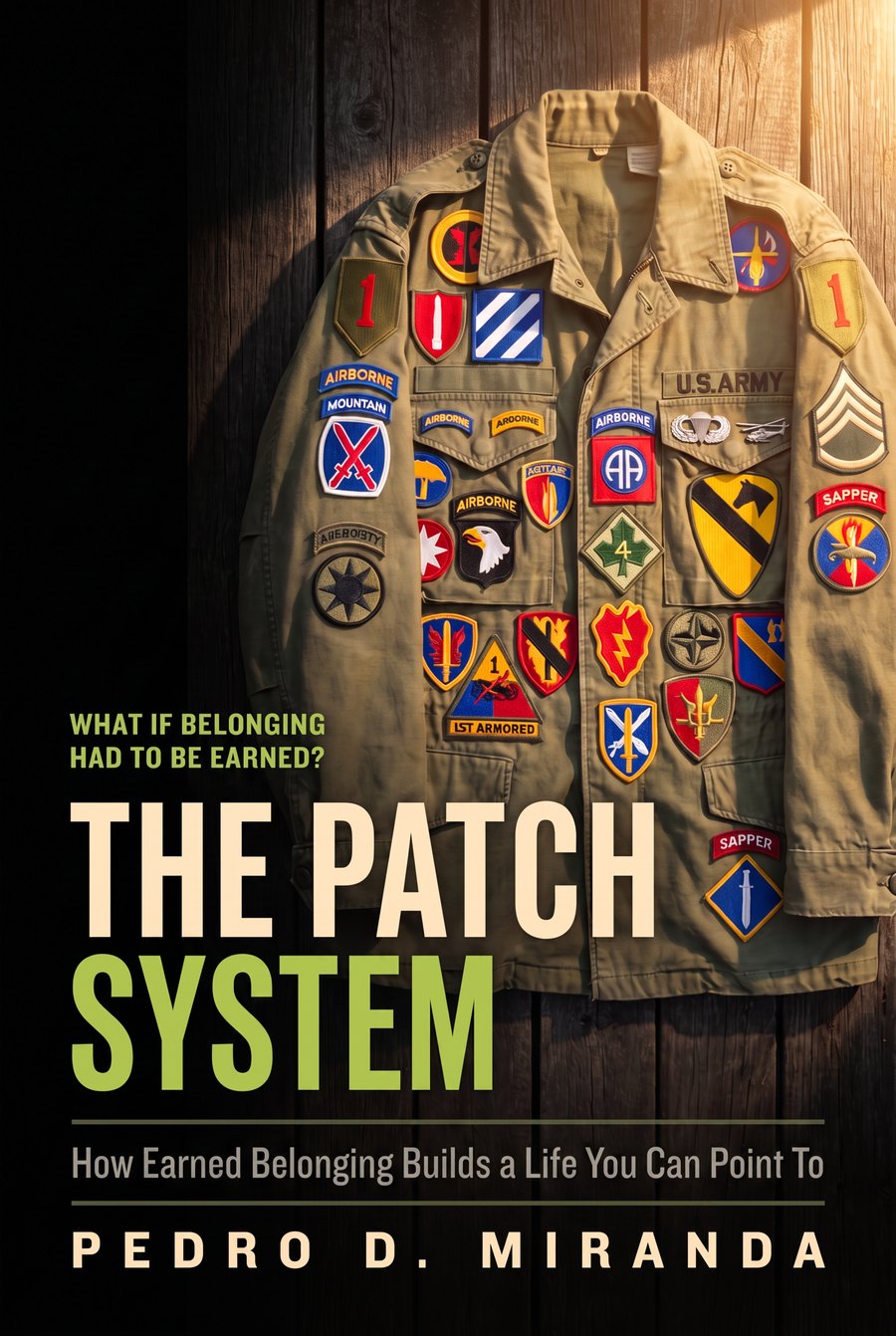
Cover of The Patch System, the book behind the programme

Programme · ninety days

How many ways does your company have to tell someone they went up?

For most owners the honest answer is one. It is expensive, it is scarce, most of your people will never get it, and it depends on somebody above them leaving. That is not a motivation problem. It is a single-axis problem — and the largest organisation in the Western world solved it a century ago with cloth.

Start with a diagnosis


What gets installed

A second axis

Rank is one axis and most companies only have that one. The patch is a second: a lateral ladder that lets you tell someone they went up without inventing a title, without moving them away from the work they are good at, and without waiting for a seat to open. It is the answer to I have nothing to give them.


The six phases

Ninety days

01

Diagnosis · The Flat Ceiling Report

How many ways your company currently has to tell someone they went up, counted honestly. For most companies the answer is one, and it depends on somebody above them leaving.

02

Inventory · The Patch Inventory

Everything your people already cross that nobody marks — the hard account, the shift that was saved, the skill that took two years. Most companies find more than they expect.

03

Design · The Ladder

The trails themselves: what each one requires, what it is worth, and what it is called. A hard cap of nine trails in the first year — more than that and none of them mean anything.

04

Judgement · Standards & Board

Who decides, against what published standard, and who can say no. This is the phase every company wants to skip, and skipping it is what kills the system: recognition nobody can fail is recognition nobody wants.

05

Surface · Display & the Pay Clause

Where the achievement is visible every day, and the clause that ties it to money. The symbol never replaces the pay. A patch that costs the company nothing is worth exactly that.

06

First cohort · The Ceremony

The first people through, and the ceremony that is not the closing of the process but part of the prize — the title arrives with it, in front of people who matter.

If nobody fails, the trail is dead.

A failure rate between fifteen and forty per cent is a vital sign, not a problem to be fixed. It is the number that tells you the barrier is real.

Two things said plainly

Before you ask what it costs

The price is not published, because it has not been earned yet. The programme has not been installed end to end in a company. Until it has, and until the cost of doing it is measured rather than guessed, quoting a number would be inventing one. The first installation is priced as what it is: a first installation.

A patch comes with pay. In the institution this is drawn from, the jump comes with jump pay. The symbol is never a substitute for money — a company that installs the ceremony and skips the clause has built a nicer way to say no.

Start with a diagnosis


The book behind it

The Patch System

How Earned Belonging Builds a Life You Can Point To. The programme is the company-sized version of an idea the book makes for a person: that belonging is worth what it cost to get.

Read about the book →