
Where companies actually die — and how the lasting ones are built. A memo for owners, family offices and the people who advise them.
You're in. The next memo will find you.
No list-selling, no spam, no pitch disguised as analysis. Unsubscribe anytime.
The Owners' Table · Memo No. 1 · July 2026
A trust in Singapore, a foundation in Liechtenstein, a holding company in Gibraltar — and a $10 billion enterprise now being fought over in front of judges.
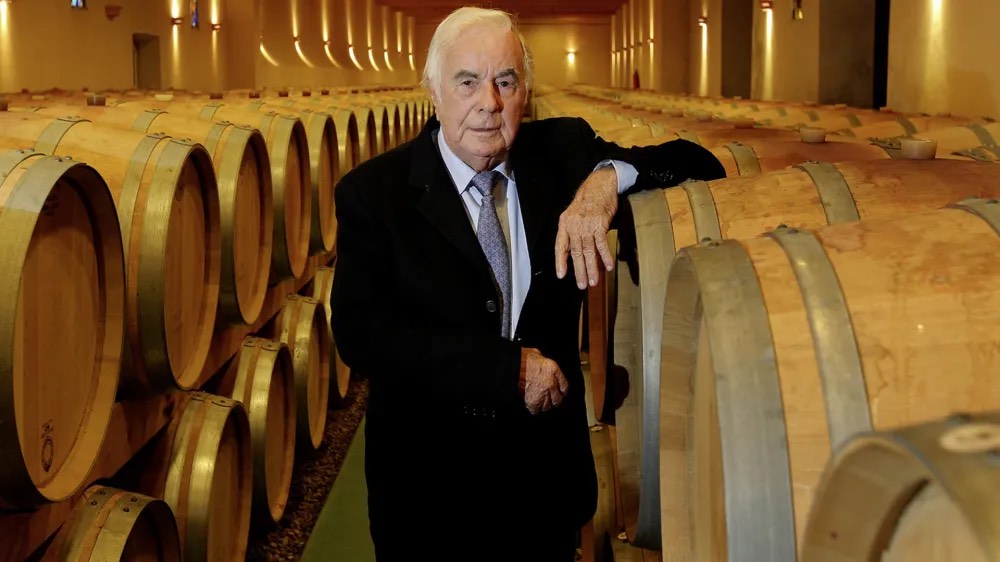
There is an image that follows every owner past sixty. It isn't the company failing. It's lying in a hospital bed, lucid enough to hear, while the children argue in the hallway about who gets what. Every owner has pictured it. And nearly every owner gives themselves the same answer: I'll have everything locked down long before that.
Pierre Castel locked it down. Few people on earth have ever locked it down more thoroughly. Which is exactly why his story belongs on your desk this week.
If the name doesn't ring a bell, the scale should. Pierre Castel is 99 years old. He started selling wine in Bordeaux in the 1940s; eight decades later, the Castel Group is one of the largest beverage businesses in the world — French wine brands, the Nicolas retail chain, and the beer labels that dominate much of Africa. Roughly 43,000 employees, operations across some 35 countries, and a valuation in the neighborhood of $10 billion.
More than thirty years ago, Castel did what every wealth advisor tells a man with that much to protect to do. He didn't leave control to chance. He built an architecture: a holding company in Gibraltar to concentrate control of the group, a foundation in Liechtenstein, and — in 2008 — a trust in Singapore, with the family receiving distributions through the structure. A Swiss watch of asset protection, designed for precisely one purpose: to keep the heirs from fighting.
And yet. Today his only daughter, Romy Castel, and his nephew Alain are in litigation with Gregory Clerc — the longtime executive Pierre himself chose to run the group. The fight is playing out in Singapore's courts. In December 2025 the heirs moved to oust Clerc; in January 2026 they lost that first round, when the vote to remove him as director of a key Singapore entity failed — and they immediately announced they would try again. Bloomberg has covered it as what it is: a real-life Succession.
Thirty years of structure. And the family ended up in front of judges anyway.
Here is what most people will take from this story: what a mess, what a difficult family — thank goodness mine isn't like that. And here is what is actually happening, which concerns anyone who signs the checks:
The structure did everything a structure knows how to do. It wasn't enough.
Gibraltar, Liechtenstein and Singapore solved the tax problem, the jurisdiction problem, the creditor problem. They solved ownership. What all that engineering did not solve — because no trust can — is who is in charge, and why the family should accept it. The daughter and the nephew are not fighting over money; the money flows regardless. They are fighting over control and legitimacy — over the question that was never answered out loud while the founder could still answer it: when you can no longer decide, Pierre, who decides? And on whose authority?
A trust distributes dividends. It does not distribute obedience.
Let me tell you what I see from my chair, after twenty years at these tables.
Every succession moves five inheritances at once — not one. There is the inheritance of ownership (the shares, the units, the assets). Of power (who decides). Of knowledge (what only the founder knows). Of relationships (the banker who trusted him, the supplier who picked up the phone at eleven at night). And of culture (what the company is when nobody is giving orders).
The mistake that costs empires — and Castel is the billion-dollar portrait of it — is believing that solving ownership solves the other four. Pierre Castel is a master of the first inheritance; few men alive have armored ownership like he did. But armored ownership with undefined power is not peace. It's a bomb with the pin carefully stored.
The fine distinction — the one that separates the owner who sleeps from the owner who becomes a headline — is this: ownership transfers by instrument; power transfers by process. You sign a document and ownership changes hands at a closing table. But power — real authority, the kind that makes a banker return the call, a director comply, a cousin accept — fits in no clause. It is built over years of shared exposure and decisions made together while the founder is alive to legitimize them. Transfer ownership by deed and assume power went with it, and you've handed your heir an aircraft they've never flown — with your best wishes for the first storm.
There is a second distinction buried in the Singapore filings, and it's the more uncomfortable one: an heir is not a successor. Every heir has an absolute right to ownership — blood is sufficient. No heir has an automatic right to management — that is earned by competence, and legitimized in front of the family while the founder can still do the legitimizing. Romy Castel's inheritance is not in question. What the litigation is actually asking is whether being an heir confers the right to command — and the legal answer and the emotional answer point in different directions. That gap is where this family has been living, inside a courtroom.
Pierre Castel armored his ownership across three continents and left the transfer of power for the living room. No trust teaches an heir to lead — and no court can hand back the authority a founder didn't pass on while he could.
The practical test costs nothing and requires no offshore counsel. Write down, today, the answer Pierre Castel evidently never made explicit enough: if I cannot decide tomorrow morning — not die, simply cannot decide — who decides, under what formal authority, and who in my family already knows it and agrees? If you can't write the names and point to the document behind each one, your ownership may be as armored as Castel's — and your succession just as exposed. Structure protects the estate. Only decisions, transferred in life and by process, protect the peace.
If you want to test your own exposure with more than one question, I keep a short instrument for that — eleven questions, five minutes, no flattery: the Succession Readiness Assessment. That's the whole ask. The next memo will find you when it's ready.
Pedro D. Miranda
The Owners' Table · Memo No. 1
Bloomberg (Jan 8, 2026), “Heirs to Billionaire Castel’s Beer Empire Lose Bid to Oust CEO.” Read
Fortune (Dec 22, 2025), “Billionaire Castel’s daughter seeks CEO ouster in bitter split.” Read
The Edge Singapore, “CEO of Castel Group fights bid by billionaire founder’s heirs to oust him.” Read
The Owners' Table is educational commentary for owners and their advisors — not legal advice. Pedro D. Miranda holds a Master of Laws from Brazil and is not licensed to practice law in the United States; where legal counsel is required, he works alongside your own licensed attorneys.